

Timeless resume trends
“What’s a useful resume look like these days?”
That question got posted in a private channel where I hang out. As you might expect, it got me thinking.
Resume trends come and go. If you’ve been out of the job hunt for a while, feeling apprehension about what works now and what’s dated is normal.
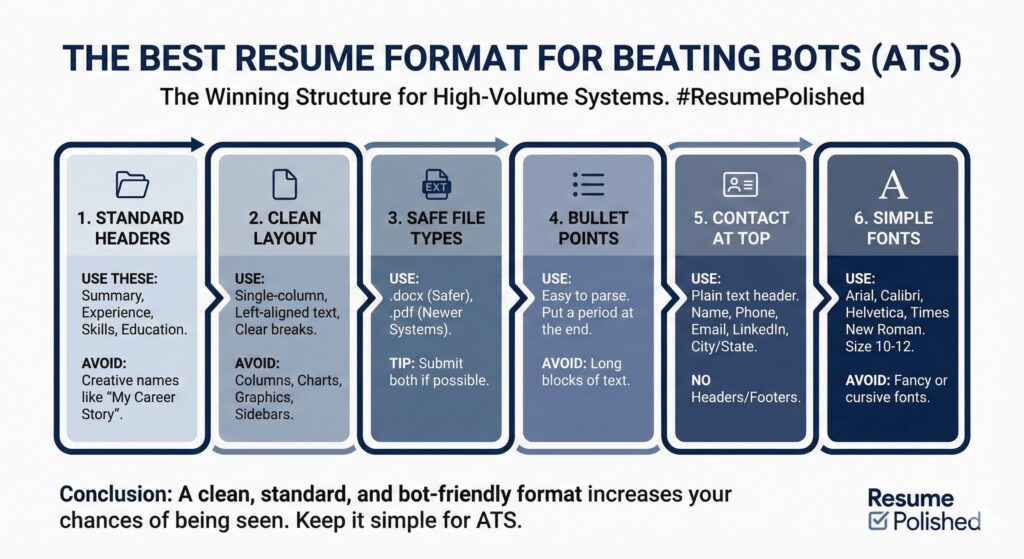
The biggest point is you want a resume optimized to pass Applicant Tracking Systems (ATS). The folks over at Resume Polished summarize the strategy succinctly:
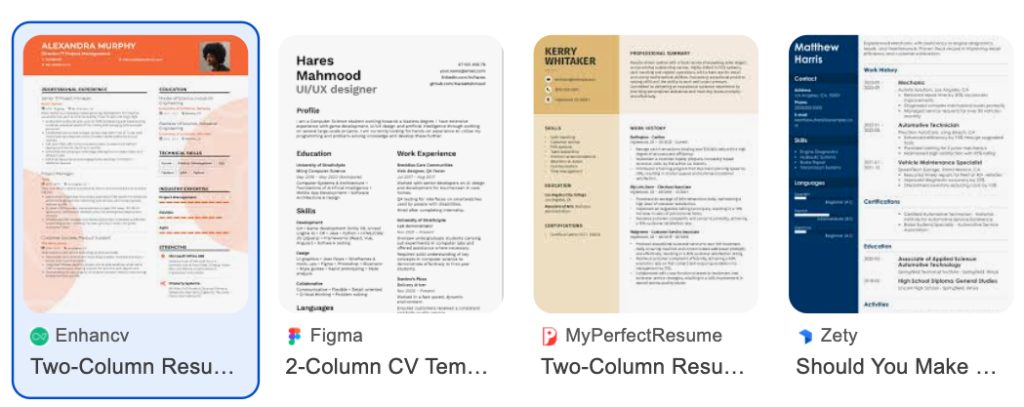
If you’re a designer or creative, a resume designed for human eyes may make sense as a leave-behind for in-person networking. I wouldn’t necessarily use these specific layouts, but here’s a loose idea to get you started:
You can also check in with folks like Greg Langstaff, who posts publicly and often about resume trends.
So, let’s review a few strategic tactics that are always in style whatever formatting decisions you make.
1. Impact-driven language sells prospective employers on past success
I have hired and worked with enough coordinators, junior analysts, and program managers to know which tasks relate to these roles. So has every other hiring manager.
Rehashing your day-to-day responsibilities without context? Don’t make my eyes glaze. I care less about what you did and wayyyyy more about why it mattered and what you achieved.
Telling the story of your impact offers insight into your understanding of the business that you supported:
- If you’re on the commercial side, how did your work help the organization earn more revenue or sign more clients?
- In R&D or product development? How did your wins add up to more shipped work?
- Senior executive? Which KPIs did you drive and what revenue rolled up under you? How did you make the CEO’s day less of a nightmare on an ongoing basis?
Why this matters: If you have no idea how you helped your current or past organization grow, how can you convince me that you’ll be able to help my organization thrive?
The tricky part: You have think about it first. LLM chatbots can’t do that work for you because, real talk, they weren’t there. They have no idea which wins you racked up or what actually counted, so they will either give you something generic or (worse) make something up.
If you have spent the time to dig into your specific experience, a chatbot can clean up the positioning, grammar and spelling AFTER you’ve done the thinking.
2. Structure your employment blocks with key work receipts
Do you remember all the stats from your past projects? Without strong notes or screenshots, it’s really hard to keep track.
“But I signed an NDA.” Yes, friend, I get that. I’m not saying publish the screenshots. But you need to be able to tell the story of your work, first in your own mind and then to others.
And time is the enemy of specificity. Our memories fray and fragment or vanish altogether. A screenshot? That sucker is yours for life.
Having receipts proves what you did and guarantees you will speak with more specificity and clarity about your work without holding it all in your head over years if not decades.
When done well, a receipt grounded in granular detail can act as an interview showstopper.
2.a Hold up, what’s a gold-standard work receipt?
Meet Leilani Bruce. She’s got a gold standard example for SEO work that I refer to ALL THE TIME.
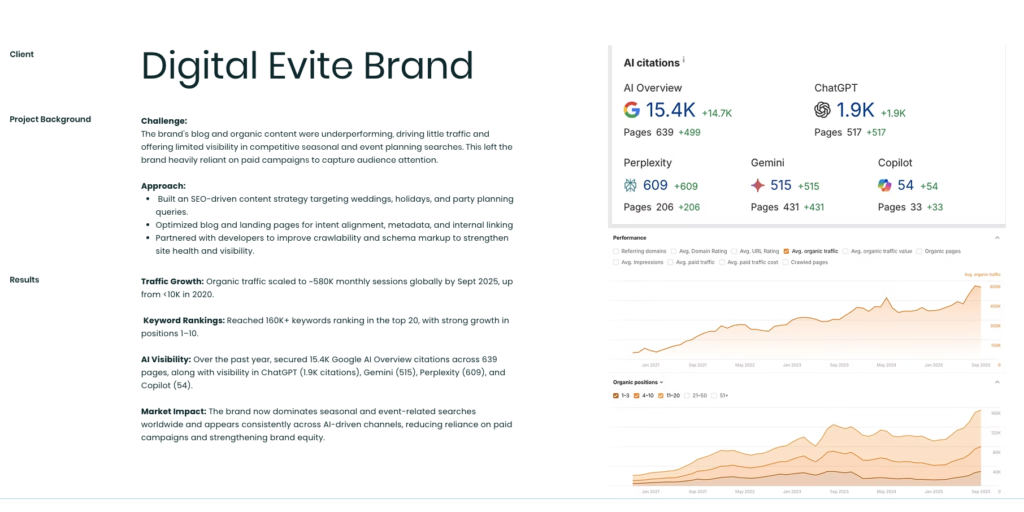
We don’t need to know which company Leilani worked with to understand her results. The stats don’t include identifying details. But it’s one hell of a hockey stick.
If you were Leilani, your resume would give the one-line version of this receipt, and your cover letter would refer to it, too. In interviews, you’d definitely talk about that chart until the cows come home.
“That doesn’t apply to my field. Results are hard to capture for my profession.”
Okay, deep breaths.
Now ask yourself: What IS a gold-standard receipt in your field?
Better still: What receipts do you have? If they feel outdated or unimpressive based on the asks you’re seeing in job descriptions or feedback you’ve had via interviews, how can you scheme your way to better ones?
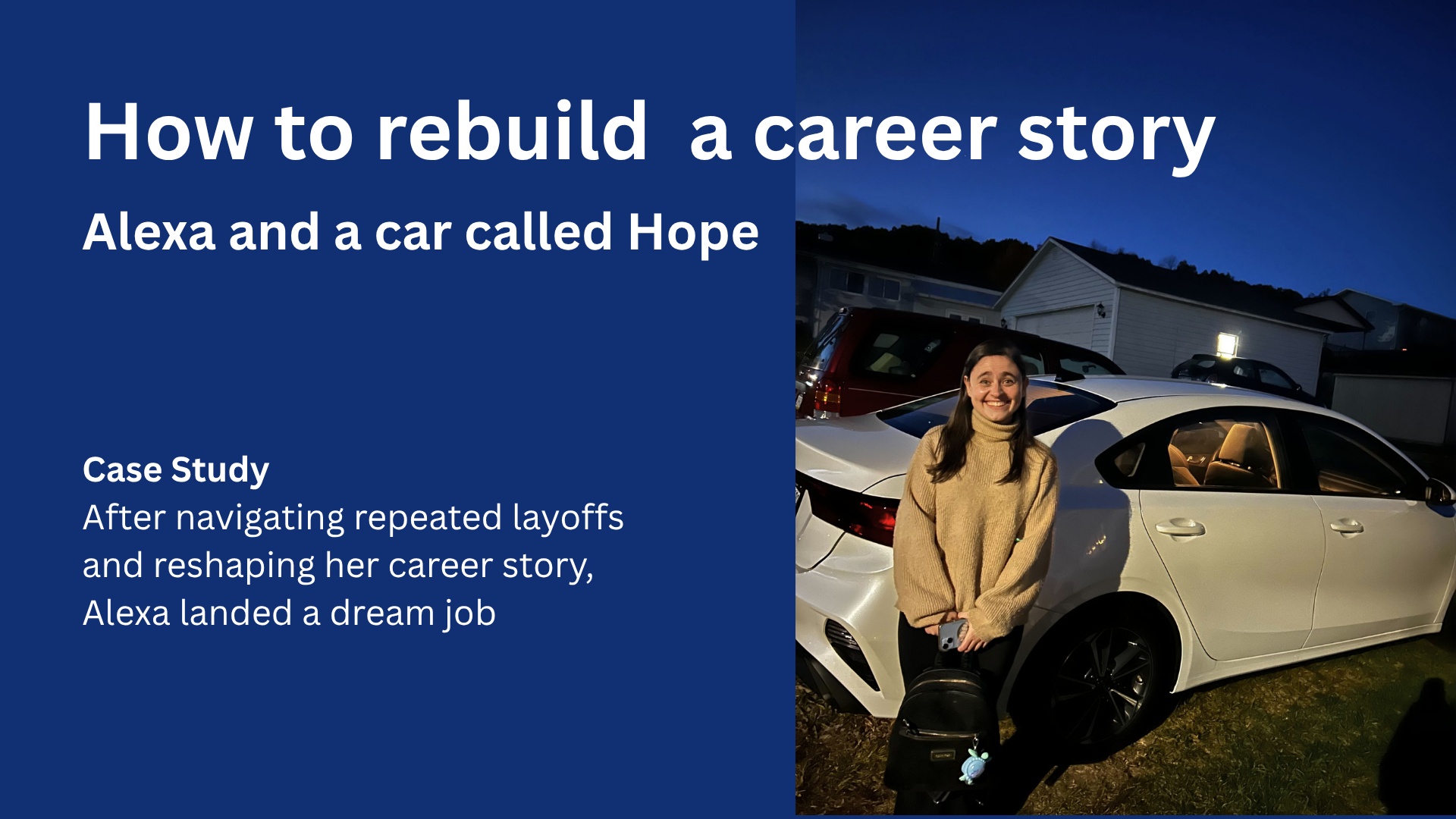
I had a client apply that strategy to her portfolio. She landed a killer job within six months (more about that later).
3. Trifecta results prep: Pick 3 key achievements for every job
Human brains love patterns. We particularly love threes (chatbots do, too, because they were trained on human outputs).
A game I like to play for each role listed on my resume is: What are the three biggest achievements I had in that job?
With the receipts from #2 above, learn those three achievements and their supporting details inside out and backwards. Carry the key messages across your resume, cover letter, LinkedIn about and employment sections, STAR answers, portfolio materials, etc.).
If asked in an interview, you can also explore each one in more depth to demonstrate your abilities and insight. (Pssst: After giving the summary, wait for interviewers to ask for more.)
Why does it matter? Like a politician who refuses to deviate from the briefing note their PR team gave them before a media interview, this grounding lets you come back to the strengths you’ve built through these projects in high-pressure situations like a final-round interview. Once you know them, you can bring them up time and again.
It’s far easier to get hired when your achievements line up with what the new employer or client wants. Quantify and qualify your results. There’s a big difference between leading a team of two or a team of 30.
For example, In tech, we compare new jobs to “drinking from the firehose.” That metaphor describes the challenge of levelling up to a new threshold of scale and throttle. Demonstrating how much you’ve previously managed tells hiring teams when you can hit the ground moving and where you might need additional support to come up to speed.
4. It’s never been more important to talk to other HUMANS
I’ve been an avid fan of Raw Signal Group‘s newsletter for ages. It gets published every other Wednesday. More than any other instance, the instalment published April 1, 2026, explains why I don’t recommend relying on submitting online applications as your primary job hunting tactic.
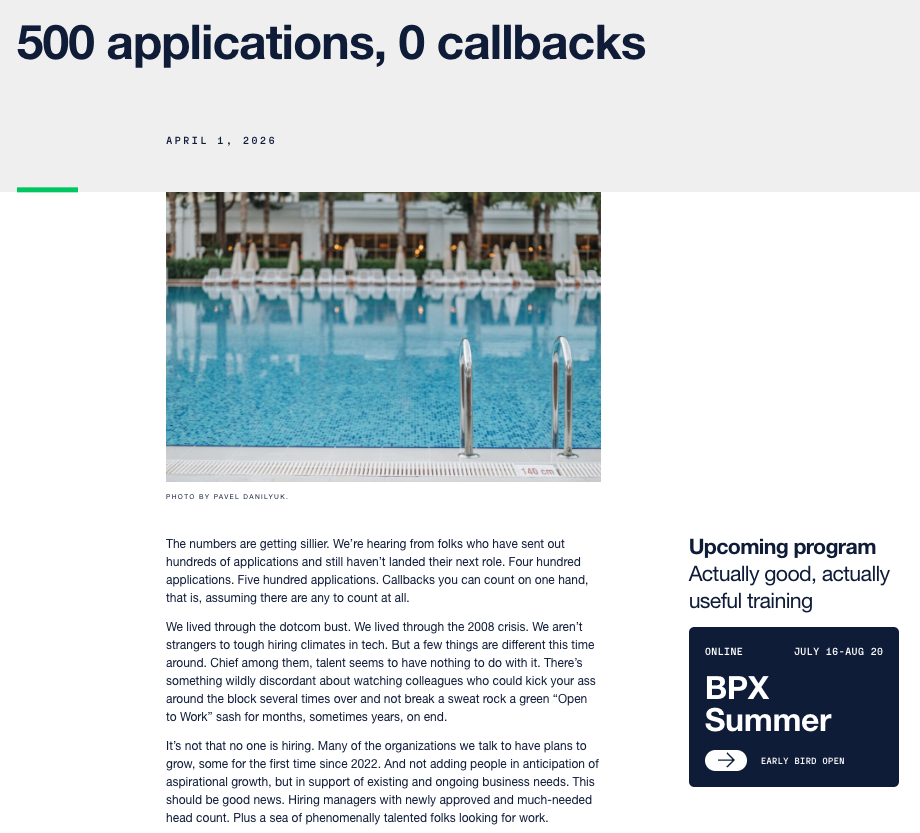
For all the reasons Melissa and Johnathan Nightingale list, sitting at home firing them off without talking to anyone is a flatlining strategy.
Layoffs have been deep and extensive. I’ve spoken with multiple folks who have been unemployed for months if not years. For every posting that goes up, the candidate pool is as deep as the Marianas Trench, to the point where getting seen that way has virtually stopped working.
There’s literally a subhead in that article titled, “The front door is fucked.”
So what do we do? The biggest game changer in the job search is making a networking strategy to talk to other people.
I’ve even made a game of it. Want to play?
Drop me a line and let’s get started.
(Props to Andrew Neel who took the Unstock photo I used in the featured image.)



01 Comment
Mirror Prison Lies: Breaking the career story holding you back - Elizabeth Monier Williams
05 May, 2026[…] your work history. Focus on internalizing your three key achievements for each role so that you can talk easily and naturally about them. It’ll remind you of your strengths and set […]
Comments are closed.