Career Strategy Secrets: Map Your Profession’s Subdisciplines
Career success hinges on knowing your profession’s disciplines. After all, few of us can instinctively pick the correct direction to explore without some kind of map.
If you studied medicine or law, you likely left your academic training with a strong sense of what’s possible. Those professions require substantial preparation to practice each subdiscipline. Students rotate through a variety of specialties to learn what they like and what they don’t before focusing.
For other professions (looking at you, marketing!), building an informed understanding of what’s going can feel far more haphazard.
And it’s a common topic in my career conversations, especially with those who are relatively new to the workforce.
Why should I be curious about my profession’s subdisciplines?
While scrolling LinkedIn last week, I came across this excellent post by Gertrude Nonterah, PhD:
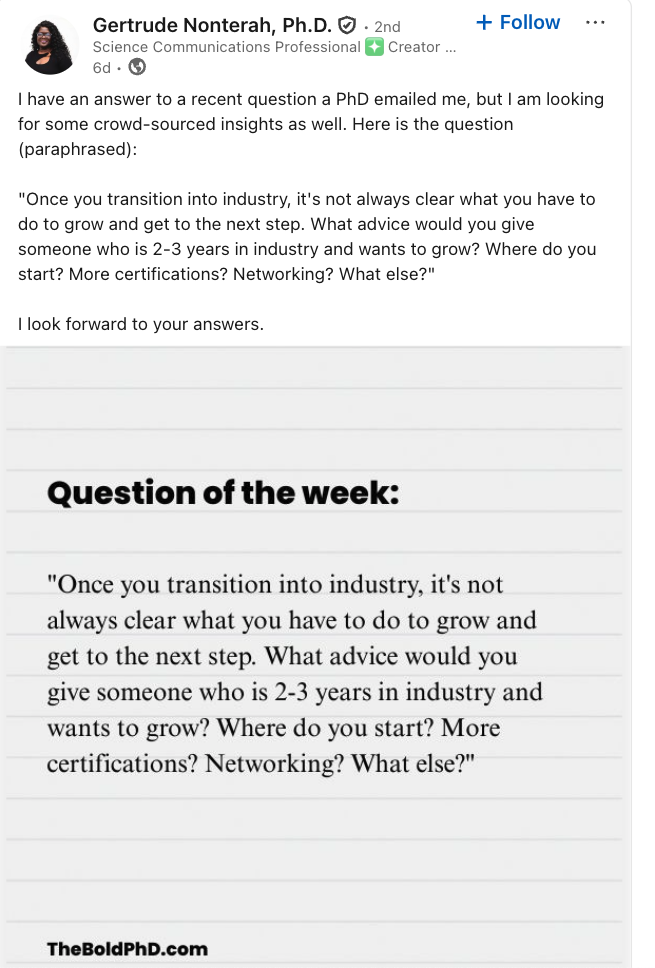
Gertrude’s question and the slew of great answers from her network touched on a recurring pattern I’ve noticed.
When my parents entered the workforce, planning a career was a lot like climbing a ladder. The steps were clear and somewhat straightforward, as were the rewards for staying the course.
Under late-stage capitalism, the workforce is a lot more complex. Building a modern career is also more like playing on a metal jungle gym: a series of multi-directional ladders that allow you to move up, across, and down with fewer defined end points.
What’s still true? It’s easier to climb if you understand where the rungs are and how big the gaps are between each handle. In this metaphor, the steps are your profession’s subdisciplines.
What do I mean? Consider marketing
I joined Growclass‘ coaching team in January 2024. I focus on delivering actionable career strategy plans for this kind community of 1,500+ marketing professionals.
Over hundreds of 1:1 conversations and 15 seminar workshops with 600 of my peers, I often get asked, “What do I do next?” Usually, the person asking is new to the profession or thinking about a pivot.
Let’s say, for example, that you started in social media and grew an Instagram account for a direct-to-consumer brand from zero to 10,000 followers. That raw number is a great stat for your portfolio, no question. It likely also means you have excellent photo- and video-based content, but you’re not sure what doors it opens.
Short answer: Where you go next depends on your strengths and which professional branch of the marketing career tree you’re exploring.
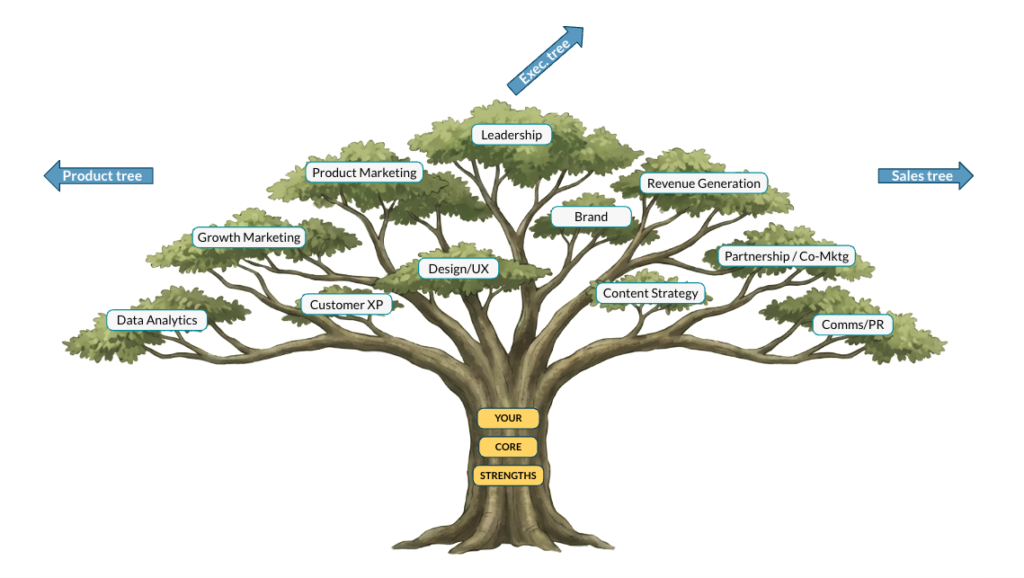
Ask twenty marketing leaders and they’d likely draw you twenty different versions of that tree map. The exact names and places aren’t important.
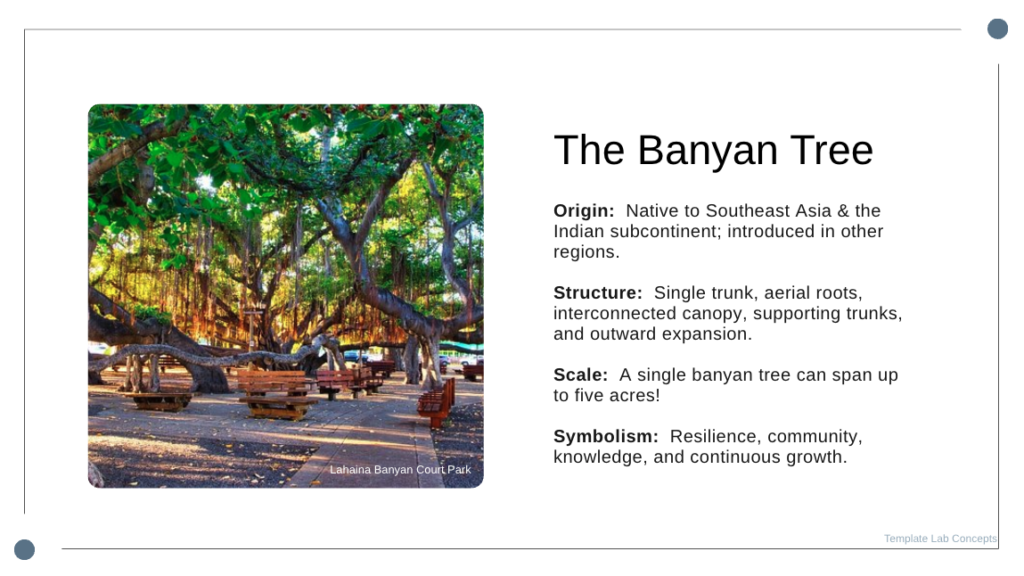
What I like about the banyan tree as a metaphor is its ability to grow multiple trunks over time. And, like a real tree, the banyan concept is more of a 3D experience than a 2D static image. It’s possible to climb up and across the branches in a non-linear way, sometimes in multiple directions at once.
Social media, for example, is a specialization within content strategy, which uses a range of assets and channels to tell a story over time about a brand, product or company. Depending on your situation, that experience may also lead you into growth marketing through, say, paid ads or landing page copywriting.
Content strategy is the marketing branch that tells stories to help customers see themselves in the service or product offered. If you’re new to the profession, you may not have experienced how social media offers expansion into brand, communications/PR, design, or growth marketing.
That gap may exist for several reasons:
- You’re working remotely, which offers fewer informal opportunities to ask questions, observe senior leaders, and network.
- Your boss doesn’t realize you’re missing this context (or may also be missing some of it).
- Your team’s so busy getting things done you haven’t had time to reflect on the bigger questions.
Evolve your disciplinary map over time
Whatever your profession and specialization, your map of what’s possible needs to evolve as you grow.

Artificial intelligence and machine learning, for example, weren’t available technologies when I began my career. They now touch every marketing branch I laid out in the banyan diagram. Given enough time and runway, AI marketing may evolve into its own unique specialization or it may stay a background skill used in all of the branches. I can see an argument for each outcome.
Either way, That kind of change creates both opportunity and challenge. So, when you meet with senior leaders:
- Ask about their start in the industry. What brought them in? What’s changed? What’s the same?
- Where do they see new areas of growth?
- Which certifications would be relevant for growth in their opinion?
- How much depth do they have in the various subdisciplines reporting to their role? How do they stay current? How do they hold their teams accountable and produce the best results?
Your goal isn’t to mimic their individual journey, a lot of which may not translate to your life and experience. But these conversations can give you a sense of what’s possible and a stronger awareness of what connects related areas of expertise.
As you develop your professional career tree, you can make better decisions about where you want to go next.
Application packages: A chance to demonstrate stretch capacity
Whether your profession uses resumes, portfolios, LinkedIn profiles, or some combination of all three, showing your demonstrated capacity to stretch and grow in new areas will help get you hired.
Let’s go back to example of the person working in social media. What projects might you add or pursue depending on your next move?
- Growth marketing: Showcase opportunities where your work on social campaigns has translated into revenue generation. Also helpful? Data-driven experiments with content, collaborations with an ad team, or work with a small business outside of your day job that shows your capacity to lead.
- Comms/PR: Pull examples of how your work has showcased thought leadership for your company, told a narrative story, or mitigated an evolving customer crisis.
- Brand or design: Show the visual evolution in your approach to asset development, and how that foundation helped your account tell a more cohesive story. If you can, show how you’ve worked with designers or UX experts to up-level your output, skills, and performance.
- Partnerships: Highlight work with influencers or other co-marketing partners to tell a joint story of success. Better still, how did that work drive sales leads or revenue? Marketers with a strong track record of sales enablement are always in demand.
Once you’ve got a sense of where you want to go next, you can evaluate which projects you want to acquire next for your work history and portfolio, and which certifications or courses would open those doors.
Have fun!